Preview · Page 1 of 3
Meet the Book
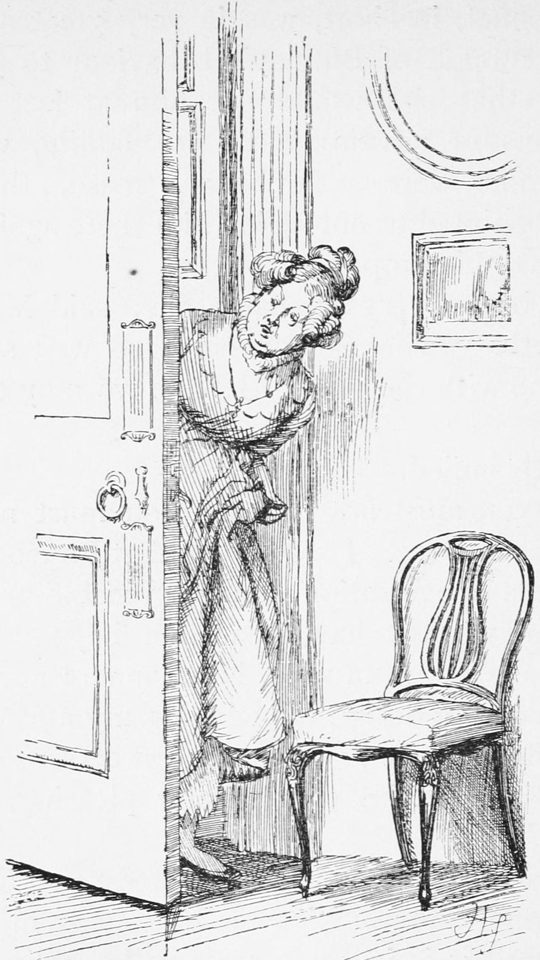
JANE AUSTEN
Volume Three ended with Lydia found, and her marriage arranged by hands she must never know. Volume Four opens on the wedding day itself: Lydia comes home a Mrs. Wickham — untamed, unabashed — and in her triumph lets slip one secret too many about who truly paid for it all. Ahead stand Mr. Bingley’s return to Netherfield, Lady Catherine’s furious descent on Longbourn — and a quiet walk, on which everything left unsaid is finally spoken.
Press Next to step into the middle of the book — and hear Mr. Darcy propose for the second time.
DISCLAIMER & SOURCE — This book speaks in the words of Jane Austen. It presents chapters 51 to 61 of “Pride and Prejudice” — the second half of Volume Three, the third volume as the novel was first published in London in 1813 — complete and unaltered, every word as she wrote it, through to her own last line and THE END. (Austen’s third volume is the longest of her three; this hologram edition carries it in two parts. This is the second part; the first — chapters 43 to 50, from Pemberley to Lydia found — stands before it as Volume Three in this line.) Jane Austen (1775–1817) has been dead more than two hundred years, and her novel is public domain everywhere: free to all. The pictures are the illustrations drawn by Hugh Thomson for the celebrated “Peacock Edition” of 1894 (George Allen, London), likewise public domain, gathered from the open collections named in the colophon. The words and the pictures are public domain; what is new, and ours, is the hologram: this holographic talking edition is © ai10forever 2026, Editor: Franklin Langston. The narration is a synthesized woman’s voice created for this edition — Jane Austen herself, in spirit, performs the reading of her own public-domain text. This is an independent production of ai10forever, not affiliated with or endorsed by any Austen estate, society, or publisher.
Preview · Page 2 of 3
From the Middle — The Second Proposal
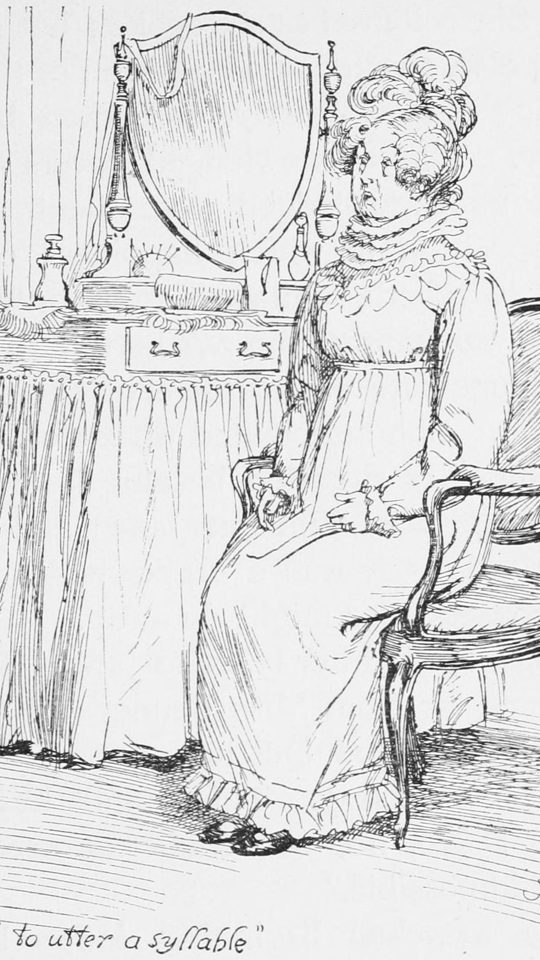
JANE AUSTEN
Lady Catherine came to Longbourn to forbid a match that had never been proposed — and carried back to her nephew the one report he needed: Elizabeth would not promise to refuse him. So Darcy returns to Hertfordshire, and finds his moment on a country walk. He thanks her; she thanks him, for Lydia’s sake, in words that undo them both — and he asks whether her feelings have changed since Hunsford, knowing one word will silence him for ever.
Press Next to see everything the whole book holds.
Preview · Page 3 of 3
What's Inside
- Volume Four, complete and unaltered — chapters 51 to 61 of Pride and Prejudice, through to Jane Austen’s own last line and THE END: 24,039 words, every word as she wrote it. Austen’s own third volume (1813) is the longest of her three, so this talking edition carries it in two parts — this is the second; Volume Three stands before it (chapters 43 to 50), and with this volume the whole novel stands complete in this line. (Volumes One and Two stand earlier in this line.)
- 2 hours and 18 minutes of narration — Jane Austen herself stands at the corner of the stage and tells her own love story, chapter by chapter, across 11 listening chapters.
- The pictures of the famous Peacock Edition — all 13 of Volume Four’s drawings by Hugh Thomson (1894), woven through the reading room and gathered in a gallery — the last of them the edition’s own closing ornament, THE END spelled in a peacock’s tail — with Jane’s own portraits: the 1870 engraving, and her sister Cassandra’s watercolor of 1810, the only portrait of her face painted in her lifetime.
- Music of her own world under the voice — Muzio Clementi’s Sonatina Op. 36 No. 1 (1797), the piano music of Austen’s drawing rooms, played softly beneath the narration.
- The barcode on every frame of the stage — scan at any moment to come back to this bookstore.
- One single HTML file — opens in any modern browser; no app, no account, no internet needed after downloading.
The text of this book is public domain everywhere: Jane Austen, Pride and Prejudice (London, 1813), chapters 51 to 61 — the second half of her Volume Three — reproduced exactly as published. Hugh Thomson’s illustrations (Peacock Edition, George Allen, 1894) and both portraits are likewise public domain. The Clementi composition (1797) is public domain and the recording used was released into the public domain. The narration is a synthesized woman’s voice created for this edition. The hologram edition — the talking stage, the narration, the assembly — is © ai10forever 2026 · Editor: Franklin Langston. An independent production, not affiliated with or endorsed by any Austen estate, society, or publisher.
$29
franklinlangston.gumroad.com/l/zverbf
Point a camera at this barcode to come straight back to this bookstore — and pass it on.